
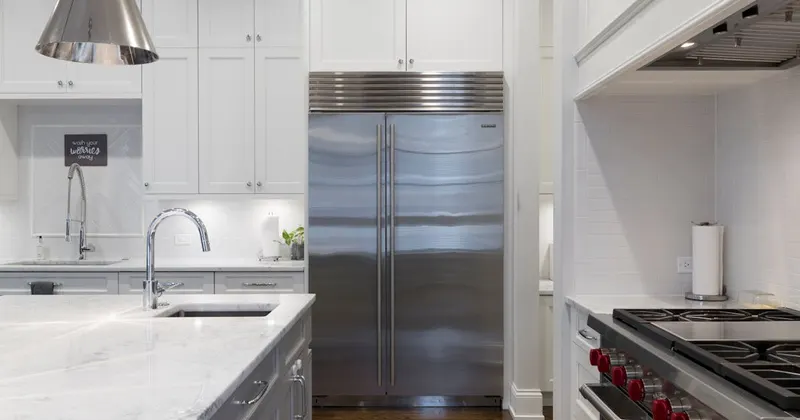
Stainless steel appliances look stunning in a modern kitchen — until fingerprints, water spots, and grease streaks take over. Most homeowners reach for the wrong products, leaving smudges worse than before. The secret is understanding the grain direction and using the right cleaning agents. This guide covers the correct technique for refrigerators, dishwashers, ovens, and range hoods, plus how to remove stubborn stains and protect the finish long-term. North Houston kitchens face extra humidity that accelerates fingerprint visibility, making proper maintenance essential.
Why Stainless Steel Shows Every Mark
Stainless steel gets its name from its resistance to rust and corrosion, not from being resistant to smudges. The brushed surface has a visible grain — tiny parallel lines from the manufacturing process. When you wipe against that grain, you push oils and residue into the grooves instead of lifting them out. That is why your appliances look worse after cleaning.
In North Houston kitchens, the combination of cooking grease and elevated indoor humidity means fingerprints and watermarks appear faster and bond more stubbornly to the surface. Proper technique and the right products make the difference between a streak-free shine and a frustrating cycle of wiping and rewiring.
Step-by-Step Cleaning Method
- Identify the grain direction by looking at the surface closely — you will see fine horizontal or vertical lines
- Dampen a microfiber cloth with warm water and a drop of dish soap
- Wipe in the direction of the grain using long, even strokes
- Rinse the cloth with clean water and wipe again to remove soap residue
- Dry immediately with a clean, dry microfiber cloth, again following the grain
- Optional: apply a thin layer of mineral oil or stainless steel polish for added protection
Tackling Common Stainless Steel Problems
Fingerprints and Smudges
For everyday fingerprints, a damp microfiber cloth is usually sufficient. For stubborn smudges, spray a small amount of glass cleaner on the cloth — never directly on the surface — and wipe with the grain. Follow with a dry buff.
Grease Buildup Around Range Hoods
Cooking splatter around range hoods requires a degreaser. Mix one part white vinegar with one part water in a spray bottle. Apply to the cloth, wipe with the grain, and follow with a water-dampened cloth to remove any vinegar residue. For heavy grease, a paste of baking soda and water applied gently with a soft cloth works without scratching.
Water Spots and Hard Water Stains
Hard water leaves mineral deposits that feel rough and look cloudy. Apply undiluted white vinegar to a cloth, place it on the stain for five minutes, then wipe with the grain. For persistent deposits, a commercial stainless steel cleaner with oxalic acid dissolves mineral buildup effectively.
Maintaining the Shine Long-Term
Prevention is easier than correction. After every cooking session, a quick wipe-down with a damp microfiber cloth prevents grease from bonding to the surface. Once a week, apply a thin coat of mineral oil or a commercial stainless steel conditioner — this fills the grain and creates a barrier against fingerprints.
If your kitchen appliances have reached the point where DIY cleaning leaves them looking dull or streaky, a professional deep clean can restore the original finish. Our team uses commercial-grade stainless steel treatments that protect and shine without residue buildup.
Related Services
SparkTex Cleaners
Professional cleaning team serving North Houston. 64+ satisfied clients across 13 cities. Insured, background-checked teams with a 100% satisfaction guarantee.