
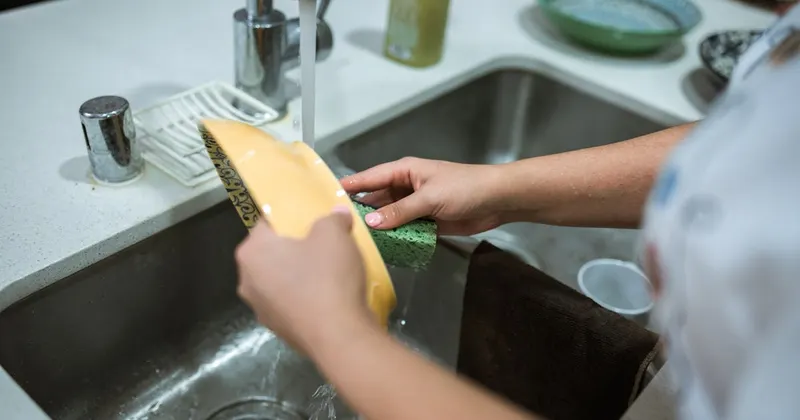
Magic erasers seem like miracle cleaning tools — they remove marks and stains that nothing else can touch. But they are not magic at all. They are made of melamine foam, a material with a microscopic structure similar to very fine sandpaper. Understanding this reveals both their incredible power and their significant limitations. Using a magic eraser on the wrong surface causes permanent damage, from dulled finishes to stripped paint. North Houston homeowners use magic erasers for everything from wall scuffs to shoe marks, but knowing what surfaces to avoid is just as important as knowing what surfaces benefit from them.
What a Magic Eraser Actually Is
A magic eraser is a block of melamine foam. Under a microscope, the foam structure looks like an interconnected web of tiny, hard filaments. When you rub it against a surface, these filaments act as an extremely fine abrasive — similar to 3000-grit sandpaper. The foam physically sands away the top layer of whatever it contacts.
This is why magic erasers remove stains that chemical cleaners cannot: they are not dissolving the stain — they are abrading it off the surface. It also explains why they shrink as you use them. The foam is literally wearing away, just like sandpaper.
Surfaces Where Magic Erasers Excel
- Painted walls: Removes scuff marks, crayon, pencil, and dirty fingerprints without repainting. Use light pressure and minimal strokes.
- White rubber shoe soles: Restores dingy white soles to near-new condition.
- Ceramic tile: Cleans grout lines and removes ground-in dirt from textured tile.
- Bathtub and shower: Cuts through soap scum on porcelain and fiberglass tubs.
- Light switches and outlet covers: Removes the yellowish grime that builds up from finger oils.
- Baseboards: Erases scuff marks from shoes and vacuum cleaners.
- Whiteboards: Removes permanent marker that regular whiteboard erasers miss.
- Outdoor furniture: Cleans mildew stains from plastic patio chairs.
Surfaces to Never Use a Magic Eraser On
- High-gloss or satin paint: The abrasive action dulls the sheen, leaving visible dull patches.
- Stainless steel: Creates fine scratches that are permanent and catch light.
- Non-stick cookware: Strips the non-stick coating.
- Car paint: Removes the clear coat, exposing the base paint to oxidation.
- Hardwood floors: Dulls the polyurethane finish.
- Granite and marble countertops: Scratches the polished surface.
- Glass with coatings: Anti-glare screens, tinted windows, and treated glass can be damaged.
- Skin: Melamine foam can cause micro-abrasions. Never use on skin to remove stains.
Pro Tips for Safe Magic Eraser Use
- Always test on an inconspicuous area first.
- Wet the eraser thoroughly before use — dry use is more abrasive.
- Use the lightest pressure that works. Let the foam do the work.
- Move in one direction rather than scrubbing back and forth aggressively.
- Stop as soon as the mark is removed to avoid over-abrading the surface.
Beyond Magic Erasers: Professional Stain Removal
Magic erasers are excellent for surface-level marks, but they cannot address deep stains, large-area discoloration, or damage that goes below the surface layer. For comprehensive cleaning that handles every type of surface in your home safely and effectively, our North Houston cleaning professionals use the right product and technique for each material — no guesswork, no accidental damage.
Related Services
SparkTex Cleaners
Professional cleaning team serving North Houston. 64+ satisfied clients across 13 cities. Insured, background-checked teams with a 100% satisfaction guarantee.